Celebrating the All Saints' Day in Germany: dates, congratulations, greetings, traditions and customs
On this page, you will find information about the celebration of All Saints' Day in Germany, including dates by year, customs and traditions, the origins of the holiday, and popular greetings.
Dates for the All Saints' Day celebration in Germany
The date of the All Saints' Day celebration in Germany remains unchanged every year and falls on 1 November. See calendar.
The All Saints' Day celebration date in Germany falls on Sunday, 1 November 2026 this year.
Below is a list of dates for celebrating the All Saints' Day in Germany by year, provided that in previous and subsequent years the present practice and time of the holiday celebration is preserved:
- (Sat) 1 November 2025 - All Saints' Day 2025GermanyGermany
- (Sun) 1 November 2026 - All Saints' Day 2026GermanyGermany
- (Mon) 1 November 2027 - All Saints' Day 2027GermanyGermany
- (Wed) 1 November 2028 - All Saints' Day 2028GermanyGermany
- (Thu) 1 November 2029 - All Saints' Day 2029GermanyGermany
Holiday status in the territory of Germany, brief information
- Holiday name in German
- Allerheiligen
- Holiday status
- The holiday is an official extra non-working day only in the following German states: Baden-Württemberg, Bavaria, North Rhine-Westphalia, Rhineland-Palatinate, Saarland.
- Other names of the holiday
- Allhallows Day
- Related holidays
- All Saints' Day, 1 November 2026
- Commemoration of All the Faithful Departed Day, 2 November 2026
- Remembrance Sunday , 22 November 2026
For more details, see the holiday description below.
Wishes and congratulations, greetings on the All Saints' Day in Germany
There are no congratulations or wishes on this day.
How All Saints' Day is celebrated in Germany: customs and traditions
Saints in traditional churches are Christians who were executed for their faith, or for outstanding virtues were especially noted by the church and sanctified. All Saints Day or Allhallows Day is celebrated in memory of all the saints, both canonized by the church and those left without honour and veneration. On this day, people decorate the graves of the deceased, sometimes even with flowers and fruits. A fire is lit on the grave, which keeps burning on the next day. On this day, ceremonies are also held at the cemetery, in which prayers are said for the souls of the dead.
All Saints' Day in Germany is a calm day with no dancing or loud music. In the southern part of Germany, yeast dough crescent rolls are baked at this time.
Commemoration of the Faithful Departed Day or All Souls Day
The day after All Saints Day, the Catholic Church celebrates the Commemoration of the Faithful Departed Day or All Souls Day (in German: Allerseelen). It is celebrated on the occasion of commemorating relatives and friends. Traditions and customs on this day are practically the same as on All Saints Day. On this day, special buns with raisins are baked to commemorate the dead. See the list of all popular holidays in Germany for the All Souls Day Date.
Remembrance Sunday
The Evangelical Church individually observes the day of remembrance of the dead, which is called "Remembrance Sunday" (in German: Totensonntag). On this day, it is customary to go to the graves, the customs and traditions of the holiday are also very similar to those described above, practiced on All Saints Day. The date of the celebration changes every year and always falls on a Sunday. For the Remembrance Sunday Date see the list of all popular holidays in Germany.
The beginning of this celebration goes back to the 4th century AD. The day of the celebration was rescheduled several times until, in the 9th century, the Catholic Church set it for November 1st.
The origin of the All Saints' Day
This day traditions reflect the superstitions that people were obsessed with in the past: it was believed that the souls of the dead who fell into purgatory could temporarily leave it, so for them bread, water and a light left on were placed near the coffin. Besides, people had a fear of the dead and believed that those, on the night after All Saints Day, visited their past dwellings, so people also left part of the food on the table at their homes.
These traditions have nothing to do with the Biblical narrative and are associated with superstitions and belief in spirits.
Photos, pictures for the holiday
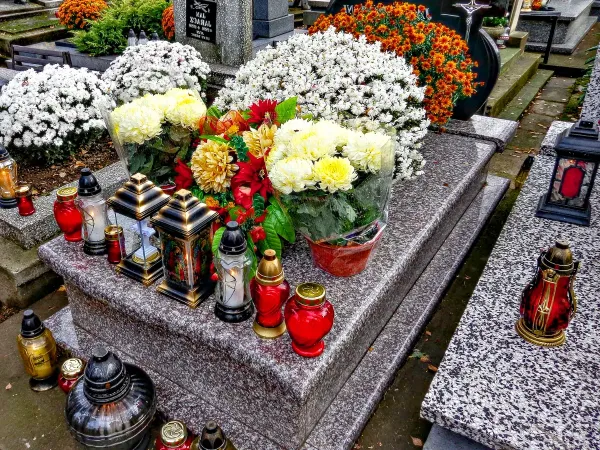
Flowers and lit candles at the cemetery on All Saints' Day
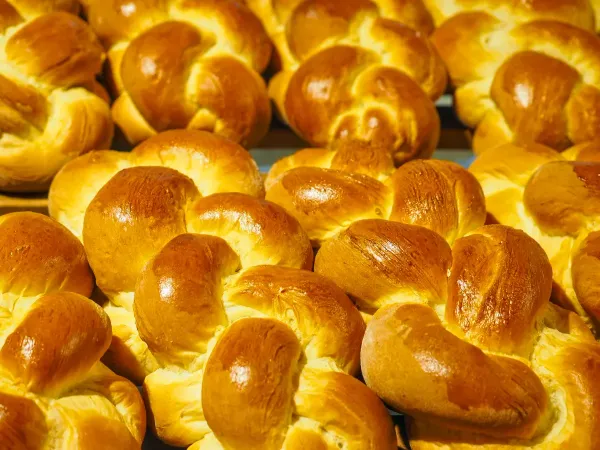
Baked goods made from yeast dough in the shape of a braid or plait
Author team kalender-plus.de
Last updated: