Celebrating the Reformation Day in Germany: dates, congratulations, greetings, traditions and customs
On this page, you will find information about the celebration of Reformation Day in Germany, including dates by year, customs and traditions, the origins of the holiday, and popular greetings.
Dates for the Reformation Day celebration in Germany
The date of the Reformation Day celebration in Germany remains unchanged every year and falls on 31 October. See calendar.
The Reformation Day celebration date in Germany falls on Saturday, 31 October 2026 this year.
Below is a list of dates for celebrating the Reformation Day in Germany by year, provided that in previous and subsequent years the present practice and time of the holiday celebration is preserved:
- (Fri) 31 October 2025 - Reformation Day 2025GermanyGermany
- (Sat) 31 October 2026 - Reformation Day 2026GermanyGermany
- (Sun) 31 October 2027 - Reformation Day 2027GermanyGermany
- (Tue) 31 October 2028 - Reformation Day 2028GermanyGermany
- (Wed) 31 October 2029 - Reformation Day 2029GermanyGermany
Holiday status in the territory of Germany, brief information
- Holiday name in German
- Reformationstag
- Holiday status
- The holiday is an official extra non-working day only in the following German states: Brandenburg, Bremen, Hamburg, Mecklenburg-Vorpommern, Lower Saxony, Saxony, Saxony-Anhalt, Schleswig-Holstein, Thuringia.
How Reformation Day is celebrated in Germany: customs and traditions
This holiday or the anniversary of the European church reformation beginning is celebrated by the Evangelical and other Protestant churches. On this day, services are held in Protestant churches, with the focus on the remission of sins through faith, because it was this understanding of Christian values that served as the reason for the reformation. Besides, traditional songs are sung on this day, and the liturgical colour is red being the symbol of blood.
In many federated states of Germany, the Reformation Day is a public holiday, free from work and study.
In 2017, in connection with Reformation Day 500th anniversary, it was declared a nationwide holiday and a day off from work.
The origin of the Reformation Day
Martin Luther, a theologian and Doctor of Divinity of Saxony, known for his translation of the Bible into German and Theses criticizing Catholicism and especially the sale of indulgences. The dispute document he wrote with 95 Theses is considered the beginning of the Reformation and Protestantism in Europe. He is believed to have nailed his 95 Theses on the door of the castle church in Wittenberg on October 31, 1517, although this is not known for certain.
It should be noted, however, that long before Martin Luther, educated people opposed the ways and customs of the church and criticized its doctrines and actions, as well as translated the Bible into the language of ordinary people – the vernacular. Many of them were accused of heresy by the church and executed.
Photos, pictures for the holiday
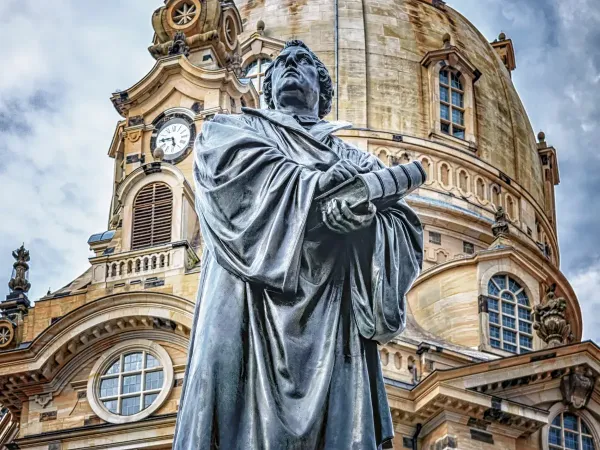
Monument to Martin Luther near the Frauenkirche Church in Dresden

Monument to Martin Luther near Kaufmannskirche church in Erfurt
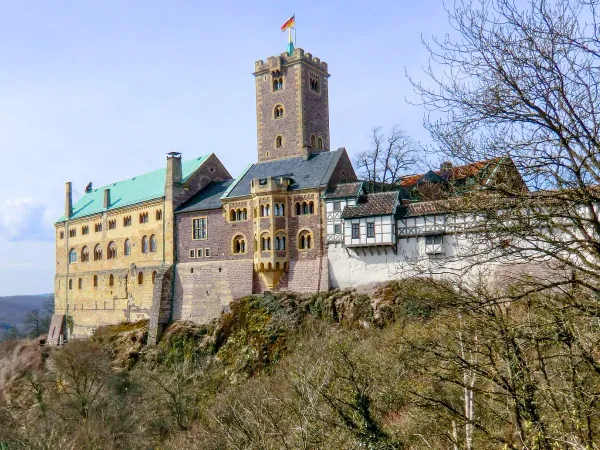
Wartburg Castle in Thuringia near Eisenach, where Martin Luther translated the New Testament
Author team kalender-plus.de
Last updated: