Celebrating the Easter in Germany: dates, congratulations, greetings, traditions and customs
On this page, you will find information about the celebration of Easter in Germany, including dates by year, customs and traditions, the origins of the holiday, and popular greetings.
Dates for the Easter celebration in Germany
In Germany, the date of Easter celebration varies each year. See calendar.
The Easter celebration date in Germany falls on (Sun) 5. and (Mon) 6 April 2026 this year.
Below is a list of dates for celebrating the Easter in Germany by year, provided that in previous and subsequent years the present practice and time of the holiday celebration is preserved:
- (Sun, Mon) 20 and 21 April 2025 - Easter 2025GermanyGermany
- (Sun, Mon) 5 and 6 April 2026 - Easter 2026GermanyGermany
- (Sun, Mon) 28 and 29 March 2027 - Easter 2027GermanyGermany
- (Sun, Mon) 16 and 17 April 2028 - Easter 2028GermanyGermany
- (Sun, Mon) 1 and 2 April 2029 - Easter 2029GermanyGermany
Holiday status in the territory of Germany, brief information
- Holiday name in German
- Ostern, Ostermontag
- Holiday status
- Easter:
The holiday is an official extra non-working day only in the state of Brandenburg. - Easter Monday:
The holiday is an extra non-working day throughout Germany – it’s a national holiday.
- Easter:
- Other names of the holiday
- Easter Sunday / Easter Monday
- Related holidays
- Easter, 5 April 2026
- Easter Monday, 6 April 2026
For more details, see the holiday description below.
Wishes and congratulations, greetings on the Easter in Germany
At Easter in Germany, it is customary to write postcards with personal wishes to friends and acquaintances, increasingly, however, they text or e-mail to each other. The following are typical brief wishes for Easter:
- Frohe Ostern! (Merry Easter!)
- Wir wünschen euch ein schönes Osterfest! (We wish you a happy Easter!)
- Euch und eurer Familie frohe Ostern (Happy Easter to you and your family)
- Frohe Ostern und herzliche Grüße zum Fest euch allen (Happy Easter and best wishes for the holiday to you all)
There are many standard texts for wishes and postcards on the Internet.
How Easter is celebrated in Germany: customs and traditions
Easter (in German: Ostern, reads "Ostern") - is a Christian holiday in connection with the resurrection of Jesus Christ from the dead. For the origin of the word Ostern, see the information below on the page.
The date of the feast is not permanent; the celebration falls on the first Sunday after the spring full moon. The dates of many other holidays are also calculated based on this date. Easter celebrations fall on Sunday and Monday; The Easter period days are the official days off from work in Germany.
Easter bonfire
Overnight into Easter, worship services are held in churches, an Easter bonfire is built in the church yard, from which an Easter candle called Paschal is lit, from which, in their turn, the worshippers in the church light their candles. The Paschal is then placed near the altar and Easter is proclaimed.
Easter eggs, games with eggs
Believers in Germany decorate trees and houses with painted eggs, give eggs to each other and eat them. There are also many games with painted eggs, like two people hitting eggs with their pointed or blunt ends against each other, and the winner is the one whose egg remains intact. Another example of the game: eggs are rolled down a hill or thrown; the winner is the one whose egg turns out to be the farthest. One more game, a team game: the eggs are placed in spoons and the players should run a certain distance and go back without dropping them.
Easter Bunny
By tradition, the Easter Bunny paints eggs and hides them in the garden. These eggs are then searched for by the children on Sunday morning.
Throughout history, other animals such as the rooster, the fox, the stork, or the cuckoo have played the role of the egg bringer (the Easter Bunny).
Mail to the Easter Bunny
In the run-up to Easter, children in Germany write letters, postcards and greetings to the Easter Bunny. These cards are sent to a special branch of the German Easter Bunny Post, where they are processed and where the replies to them are written. The address of the post office can be found at the link provided on the Deutsche Post official website.
Easter equestrian procession, cavalcade
Traditionally in Saxony, a horse-drawn procession is held on Easter, in which men on horseback and with religious paraphernalia in their hands ride through the villages with the message of Christ's resurrection. The equestrian processions come with songs, with this tradition believed to improve the soil fertility.
Easter well, fountain
Villages traditionally decorate wells or fountains - with branches, Easter eggs and other decorations.
Easter dishes of greens, baked goods
As early as on Maundy or Holy Thursday (in German: Green Thursday), traditionally, green plays an important role in cooking dishes, as a symbol of spring: green soups, salads, cabbage and spinach dishes are made.
On Easter, special pastries, sweet Easter pretzels, Easter wheat braids and crescent rolls and, of course, Easter bread are baked.
Traditionally on Good Friday, fish and dumplings with broth are cooked, as well as spinach and eggs.
In the Easter period, roast lamb or goat meat, various salads, hare meat and poultry are cooked.
Easter Monday Procession (in German: Emmausgang)
The priests, accompanied by the congregation, make a procession to the holy places on Easter Monday, but it can also be done by a group of common people. This embodies the idea of Christ's appearance to his disciples after his resurrection from the dead.
The origin of the Easter
Origin of the holiday name: Easter or Ostern
While many countries use the word Pascha to name the holiday associated with the resurrection of Christ, Germany, like England, uses the word Ostern. Why is the difference?
The word Passover originally referred to a Jewish feast commemorating the release of the people of Israel from Egyptian slavery and was celebrated with unleavened bread, roasted lamb and bitter herbs. Christians began to use the same name to refer to the holiday in connection with Christ's resurrection.
There are several explanations to the origin of the word Ostern in German, the exact one is not known. The following assumptions exist:
- The word Ostern may derive from the name of the Ancient Germanic goddess of Spring, sun and light named "Ostara." Long before Christ, the Germanic tribes and Celts celebrated the festival of spring and light and worshipped goddess Ostara.
- The word Ostern may derive from the word Osten and refers to the direction of the sun's ascension, in which the sun begins its journey across the sky.
- The word Ostern may derive from the Indo-European word Eostro, which means "Dawn", and thus conveys the message that believers should stay awake on the Easter night and welcome the dawning morning.
The beginning of Easter celebration in Christianity
The feast in honour of Christ's resurrection was established in the 4th century A.D., it was supposed to replace the pagan spring festival. It was then decided to celebrate it on the first Sunday after the spring full moon.
Origins of Easter customs and traditions
Many of the customs and traditions observed on Easter have pagan origins and are associated with rituals that people performed in connection with the spring incoming and nature awakening. For example, fire was used even in pre-Christian times to welcome the win of the sun and spring over winter, as well as to protect against evil spirits and improve fertility. Today, the Easter bonfire is also made in many places during Easter celebrations. The table below briefly summarizes some Easter customs and traditions and their origins.
| Easter customs and traditions | Origins |
|---|---|
| Dyeing eggs | A symbol of spring and the return of life, revival. In ancient China and Persia, people gave coloured and patterned eggs to each other on the festival of spring. |
| Easter bonfire and candles | Bonfires were lit at the Spring Festival even in the pre-Christian era to welcome spring, fertility, and as protection from evil spirits. |
| Easter Bunny | Hares used to be a symbol of goddesses of love and fertility even in pre-Christian times. |
| Equestrian procession | In pre-Christian times, it was a ritual to expel the evil spirits of winter from the fields. |
Photos, pictures for the holiday
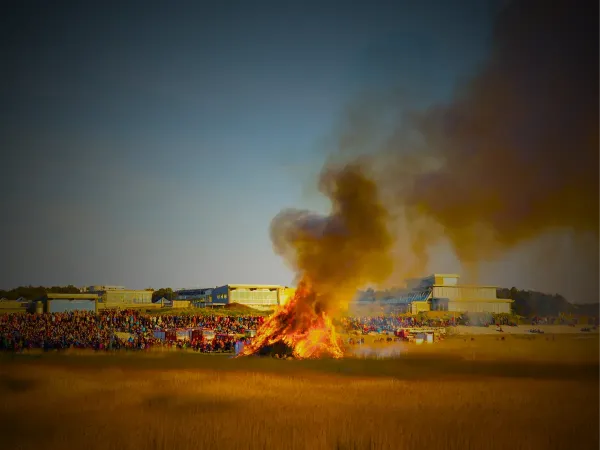
Easter bonfire in Germany
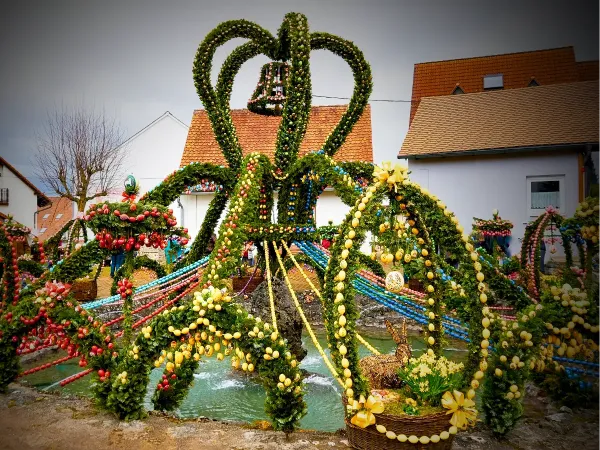
Easter fountain decorated with tree branches, eggs, and ribbons
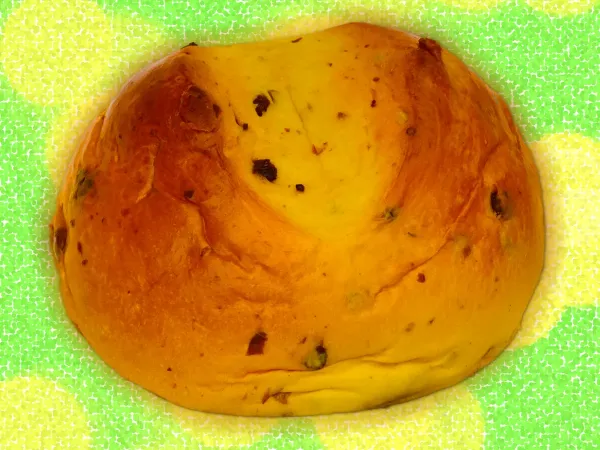
Easter sweet bread with raisins
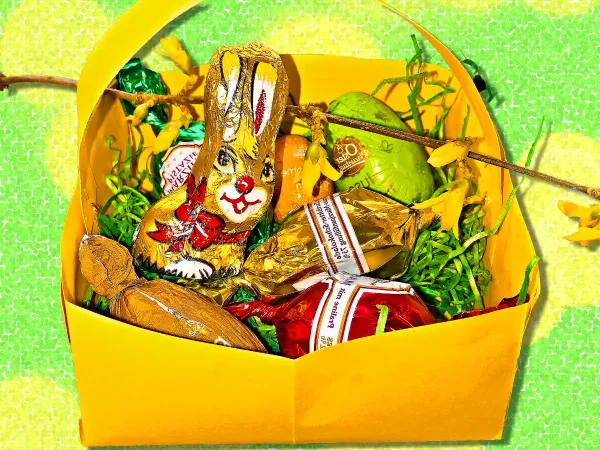
Easter sweets in Germany

A tree decorated with Easter painted eggs
Author team kalender-plus.de
Last updated: